Have you read blog posts that claim you can learn Python in days and quickly secure a high-paying developer job? That’s an unlikely scenario and doesn’t help you prepare for a steady learning marathon. So, how long does it really take to learn Python, and is it worth your time investment?
By the end of this guide, you’ll understand that:
- Most beginners can learn core Python fundamentals in about 2 to 6 months with consistent practice.
- You can write a tiny script in days or weeks, but real confidence comes from projects and feedback.
- Becoming job-ready often takes 6 to 12 months, depending on your background and target role.
- Mastery takes years because the ecosystem and specializations keep growing.
The short answer for how long it takes to learn Python depends on your goals, time budget, and the level you’re aiming for.
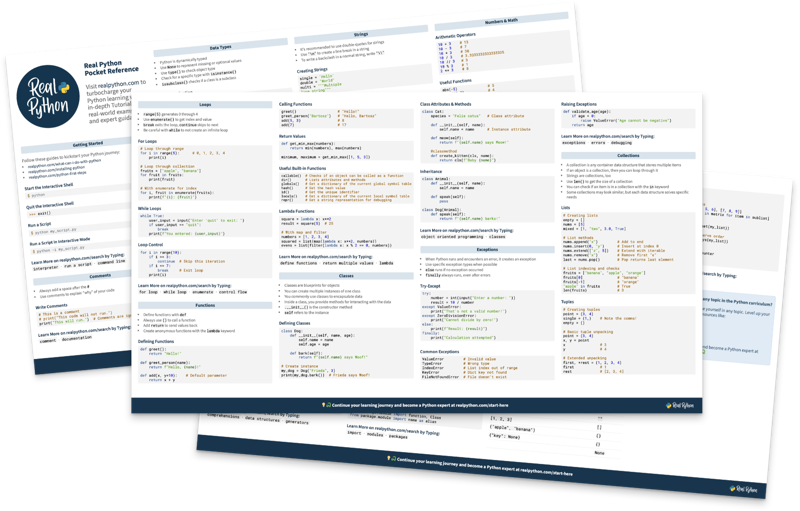
Get the PDF Guide: Click here to download a free PDF guide that breaks down how long it takes to learn Python and what factors affect your timeline.
Take the Quiz: Test your knowledge with our interactive “Python Skill Test” quiz. You’ll receive a score upon completion to help you track your learning progress:
Interactive Quiz
Python Skill TestTest your Python knowledge in a skills quiz with basic to advanced questions. Are you a Novice, Intermediate, Proficient, or Expert?
How Long Does It Take to Learn Python Basics?
Python is beginner-friendly, and you can start writing simple programs in just a few days. But reaching the basics stage still takes consistent practice because you’re learning both the language itself and how to think like a programmer.
The following timeline shows how long it typically takes to learn Python basics based on how much time you can practice each week:
| Weekly practice time | Typical timeline for basics | What that feels like |
|---|---|---|
| 2–3 hours/week | 8–12 months | Slow but steady progress |
| 5–10 hours/week | 3–6 months | Realistic pace for busy adults |
| 15–20 hours/week | ~2 months | Consistent focus and fast feedback |
| 40+ hours/week | ~1 month | Full-time immersion |
These ranges assume about five study days per week. If you add a sixth day, you’ll likely land toward the faster end of each range.
You’ll get better results if you use this table as a planning guide. Don’t think of it as rigid deadlines—your learning pace depends on many factors. For example, if you already know another programming language, then you can usually move faster. If you’re brand-new to coding, then expect to be at the slower end of each range.
As a general guideline, many beginners reach the basics in about 2 to 6 months with steady practice.
Note: If you’re ready to fast-track your learning with an expert-guided small cohort course that gives you live guidance and accountability, then check out Real Python’s live courses!
With a focused schedule of around four hours per day, five days per week, you can often reach the basics stage in roughly 6 to 10 weeks, assuming you’re writing and debugging code most sessions. By then, you should be able to finish several small projects on your own.
When you read online that someone learned Python quickly, they’re probably talking about this basics stage. And indeed, with the right mix of dedication, circumstances, and practice, learning Python basics can happen pretty fast!
Before you go ahead and lock in a timeline, take a moment to clarify for yourself why you want to learn Python. Understanding your motivation for learning Python will help along the way.
Learning Python means more than just learning the Python programming language. You need to know more than just the specifics of a single programming language to do something useful with your programming skills. At the same time, you don’t need to understand every single aspect of Python to be productive.
Learning Python is about learning how to accomplish practical tasks with Python programming. It’s about having a skill set that you can use to build projects for yourself or an employer.
As your next step, write down your personal goal for learning Python. Always keep that goal in mind throughout your learning journey. Your goal shapes what you need to learn and how quickly you’ll progress.
What’s a Practical 30-Day Learning Plan for Complete Beginners?
When you’re clear about your why, you can start drafting your personal Python learning roadmap.
If you’re starting from zero and can spend about 5 to 10 hours per week, the following plan keeps you moving without becoming overwhelming:
- Week 1: Install and set up Python, learn about basic syntax, variables, and conditional statements
- Week 2: Learn about basic data types,
forandwhileloops, and functions - Week 3: Work with lists and dictionaries, file I/O, and debugging basics
- Week 4: Build a small project, add simple tests, and polish it through refactoring
Aim to finish at least one small project by the end of the month. The project matters more than completing every tutorial or task on your checklist.
For a guided learning path that starts from the beginning and leads you to a fundamental understanding of object-oriented programming, you can follow the Python Basics Learning Path:
Learning Path
Python Basics: Introduction to Python
17 Resources ⋅ Skills: Python 3 Fundamentals, Real-World Projects
This plan can get you started, but you’ll need to continue to reach a basic proficiency.
How Many Hours Does It Take to Learn Python?
How much time you can spend learning has a huge impact on your outcomes. Therefore, the total number of hours spent actively learning is a better planning unit than calendar months or weeks. As a rough guide, you can expect the following time commitment in hours:
| Level | Description | Estimated Focused Hours |
|---|---|---|
| Basic comfort | Syntax and small scripts | 150–200 |
| Solid ability | Small projects and tools | 300–500 |
| Job-ready for a junior role | Portfolio projects, real dev tools | 600–1,200 |
For these timelines to work, you need to spend the hours actively writing, running, and debugging code. Passively watching videos or reading tutorials won’t be enough!
Note: For many learners, a live course helps to fast-track learning through expert guidance and built-in accountability.
You need to focus your attention and put in the practice for your brain to properly internalize programming concepts.
How Long Does It Take to Become Job-Ready With Python?
Job-ready doesn’t mean you need to be a Python expert. It means that you can build and explain real projects, use common development tools, and keep learning on the job.
At a minimum, you should be able to:
- Understand Python basics, including object-oriented programming
- Build and explain two to four portfolio projects of your own
- Use modules and packages and understand how to evaluate third-party packages
- Work with virtual environments, optionally using uv, and understand dependency management
- Use Git and work with a local development setup
- Read docs and debug errors independently
- Write tests and handle exceptions
- Work with at least one library or framework tied to your target role
- Have a high-level understanding of coding with AI and some experience using an agentic coding tool such as Claude Code
Complete beginners often need 6 to 12 months to reach this level. There’s a lot to learn! If you already code in another language, 2 to 6 months can be enough with a focused plan.
As mentioned earlier, the actual hours you put in matter most, so if you only have a few hours per week, expect to be at the longer end of the range.
How Do Timelines Differ by Goal?
Your learning timeline will change depending on what you want to accomplish. Here are some realistic ranges for common goals:
-
Automation for work tasks: If your goal is to automate spreadsheets, rename files, or scrape data, you can often get useful results in 1 to 2 months. Add another month or two for reliable, reusable scripts.
-
Web development (FastAPI, Flask, or Django): Expect 2 to 4 months after the basics to build and deploy a small web app. Job-ready web skills usually take 6 to 12 months because you also need databases, deployment, and testing.
-
Data analysis: If you already know Python basics, plan on 2 to 6 months to get comfortable with pandas, visualization, and SQL.
-
Data science and machine learning: Plan on 9 to 18 months on top of your Python skills if you’re starting from scratch in this field. You can get productive sooner if you already have a solid math background.
Always keep your motivation and reason for learning Python in mind. As mentioned before, it’ll shape both your journey and your timeline.
What Factors Influence Your Learning Speed?
Now that you have an idea of typical timelines, it’s worth remembering that learning is a personal process. Multiple factors determine how much time and effort learning Python will take for you. Here are some individual factors to consider:
-
Motivation: What do you want to use Python for, and how urgently do you want to learn it? If you have a clearly defined aim, such as a specific challenge you want to tackle, then it’ll be more straightforward to stay focused and motivated, and you might progress more quickly.
-
Availability: How much time can you invest in learning Python? Are you a student or between jobs? Can you dedicate a significant amount of each day to studying programming? Do you have a full-time job, meaning you can only study outside of work? Do you take care of children or other people? The more time you have to invest, the faster you’ll progress.
-
Background: What previous experience do you have? If you know English well, have programmed in another language, or have experience with mathematical logic and language learning, then you might progress more quickly.
-
Mentorship: Do you have someone who can teach you? You’ll learn faster with a knowledgeable friend or mentor who’s been through the process themselves and is ready to share their knowledge with you. You can get support from a colleague, a dedicated mentor, or online. If you don’t have a mentor in mind, get involved in a learning community or switch your favorite AI tool into learning mode.
-
Aim: What skill level are you aiming for, and what goal do you hope to achieve by learning Python? If you’re planning to get a full-time position as a Python developer, you’ll need to dive deeper into more aspects of the language than if you’re planning to complete a hobby project.
-
Learning Resources: Do you have access to quality learning resources? They can help you decide what to learn first and how to continue. If your learning resources have high instructional quality as well as accuracy, then you’ll learn the right things more quickly.
These are the most important factors, and they combine uniquely to shape your pace as you progress.
To give you a quick reference of how each element might affect your journey, consult the following summary table that highlights the main factors and their typical impact on learning speed (⚡️):
| Factor | Description | Influence |
|---|---|---|
| Motivation | Clear personal reasons, goals, and urgency help you stay focused and support consistent learning. | ⚡⚡⚡⚡⚡ |
| Availability | Available study time and outside responsibilities shape how quickly you can make progress. | ⚡⚡⚡⚡⚡ |
| Background | Prior experience with coding, English proficiency, and logic, math, or language learning lead to a faster start. | ⚡⚡⚡⚡ |
| Mentorship | A mentor or learning community helps you overcome confusion and setbacks faster and provides accountability. | ⚡⚡⚡⚡ |
| Aim | Career ambitions and long-term goals will require more effort and depth than a single hobby project. | ⚡⚡⚡ |
| Learning Resources | High-quality, well-structured learning materials accelerate progress and save you time by avoiding weak or confusing sources. | ⚡⚡⚡ |
You can use this table to quickly identify which factors currently work in your favor and which areas might be worth improving or seeking support for.
Note: A professional live cohort course takes care of motivation, availability, mentorship and learning resources all at once to help you learn faster.
There may be other factors that’ll influence your personal learning journey. If you’re clear on the factors most relevant for your situation, you’re in a better position to accurately assess the time you’ll need.
What Are Common Pitfalls That Slow You Down?
The biggest slowdowns usually come from habits. Many people get stuck after starting strong and drift into busywork or endless preparation. If that sounds familiar, you’re not alone, and the fix is usually a change in how you practice and choose projects.
Here are the common patterns that can show up. If you catch yourself in one, focus on improving just that habit this week:
- Tutorial-hopping without finishing: You get a quick hit of progress, but you never build the confidence that comes from shipping something real.
- Projects that are too big: Large scope turns into endless planning and pushes the first working version further away.
- Consuming content without coding: Reading and watching feel productive, but learning sticks when you write, run, and debug code.
- Avoiding error messages: Errors are helpful feedback. They don’t mean that you failed. If you skip understanding and dealing with errors, then you skip a fast track to learning.
Focus on consistent, hands-on coding, break projects into achievable pieces, and actively seek out feedback or community support. If you become intentional about how you learn and practice to avoid these common pitfalls, then you can make steady, rewarding progress.
How to Learn Python Faster
Once you know why you want to learn Python, what skill level you’re aiming for, and how to factor in your personal background, you can make your learning process more effective. The fastest progress comes from deliberate practice, tight feedback loops, and the right kind of support.
Use Deliberate Practice and Feedback Loops
You’ll learn Python faster if most of your learning sessions end with working code and a clear takeaway. That means you’ll have to type and run code as you go instead of just reading or watching. It also means building short feedback loops, where you write a few lines of code, run them, inspect and understand the output—which can be an error message—and adjust. This may feel slow at first, but it’s what makes learning stick.
If you want a practical rhythm, try this checklist for each study session:
- Code: Write and run code every few minutes, not only at the end.
- Debug: Use the REPL and a debugger to inspect values and trace errors.
- Focus: Build small, shippable projects with clear goals and tight scope.
- Test: Add a small test for the core logic of your project so you can refactor with confidence.
- Log: Keep a short note about what you learned after each study session.
These suggestions might not make a great acronym (CDFTL?), but they help you build good habits that anchor what you’re learning.
With consistent effort and the right approach, you’ll pick up Python faster and retain what you learn.
Use AI Tools and LLMs Wisely
AI can speed up your learning when you treat it as a coach. It’s great for explanations, seeing alternate approaches, and small examples that you can compare to your own code. It’s also great at debugging when you show a minimal, self-written snippet and ask for feedback.
Using AI for learning Python can become problematic if you copy generated code without understanding it. The problem isn’t necessarily that the code won’t work, but that you’re skipping the mental work that’s necessary for your mind to actually learn.
If you want to keep the benefits without the downsides, then use AI in ways that still keep you in the driver’s seat:
- Ask for explanations and alternatives instead of just asking for answers.
- Verify results by running code and checking official documentation, and add tests when possible.
- Use AI to generate practice variations instead of complete, finished projects.
- Summarize what you learned after each session in a short note so it sticks.
If you keep these suggestions in mind, you can use AI tools to speed up your Python learning without skipping fundamental understanding. It’ll pay off in the long run!
Aside from impacts on your learning, also keep in mind that AI output can be wrong or incomplete. Always treat generated code as a draft and double-check its accuracy so that you’re not accidentally leaking sensitive information or creating brittle and unsafe software.
Join a Real Python Live Course
If you want a structured learning plan with accountability and instructor feedback, consider enrolling in Real Python Live Courses. The cohort format complements self-paced learning effectively by adding structure and accountability, helping you learn Python faster.
There are dedicated courses for true beginners that’ll move you straight into a basic understanding of programming and Python. There are also courses for intermediate learners who feel stuck and want to push themselves toward true Python expertise.
Use the Right Learning Resources
There’s a wide selection of ways for you to learn Python. Consider the following learning resources and focus on those that fit you best:
-
Online resources: You can learn from online content ranging from tutorials, video courses, quizzes, and projects. Ideally, you have a specific project in mind for which you can find existing tutorials, or you follow a learning path about a topic that interests you. If you’re brand-new, start with the Python Basics Learning Path. You’ll find Real Python content labeled as basics, intermediate, and advanced to help you find the best learning resource for your skill level.
-
Books: There are many great Python books that can help you learn the language at different levels of depth and complexity. If you’re just getting started, check out the Python Basics Book. If you’re already writing Python programs and looking to improve your language skills, then you might enjoy Python Tricks.
-
Challenges: If you enjoy challenging yourself with code examples and competing on leaderboards, try completing puzzles or short exercises to keep training your skills. You can practice with quizzes, ask Code Mentor for a coding exercise or a practice project, or explore challenges like Advent of Code. Real Python has a guide to make solving your puzzles merry and bright.
-
Communities: Many people learn better with social interaction. A good learning community can keep you engaged and accountable. You can join a friendly community of experts at Real Python. You can also follow Real Python on X to stay connected with other developers, listen to The Real Python Podcast, and sign up for the newsletter to keep yourself up to date with developments in the Python world.
-
Live courses: If you learn best through live interaction, instructor support, and structured accountability, then Real Python Live Courses may be the right choice for you. These courses offer cohort-style workshops with interactive sessions and guidance from experienced instructors. They’re effective for beginners seeking a jump-start and anyone stalled at an intermediate plateau.
That’s a lot of different types of resources! It’s worth spending some time choosing the ones that are most engaging and effective for you personally. That said, when learning anything new, there’s no way around two essential factors:
- Time investment
- Consistent practice
The most important aspect is to keep showing up and make programming part of a consistent routine. To learn Python at any level, you’ll need to invest time and effort.
Conclusion
You now have a realistic set of timelines for how long it takes to learn Python, and a practical way to plan your learning. Often, learners can write small scripts quickly, reach the basics in 2 to 6 months, become job-ready in 6 to 12 months, and then spend years developing deep expertise in a niche.
In this guide, you learned:
- How long it takes to learn Python considering many different scenarios
- What the common reasons are for learning Python
- What external factors influence how fast you’ll learn Python
- Which resources you can use to improve your learning process
- How AI tools fit into a sustainable approach to learning Python
Learning to program in Python can be an excellent investment of your time. If you keep showing up and make it exciting and fun for yourself, then you’re more likely to find ways to integrate it into your regular habits. If you’re looking for more advice on your first steps, check out 11 Beginner Tips for Learning Python Programming.
If you’re beyond the basics and curious about where you stand, check your Python skills with this quiz:
Take the Quiz: Test your knowledge with our interactive “Python Skill Test” quiz. You’ll receive a score upon completion to help you track your learning progress:
Interactive Quiz
Python Skill TestTest your Python knowledge in a skills quiz with basic to advanced questions. Are you a Novice, Intermediate, Proficient, or Expert?
Frequently Asked Questions
Now that you know how long it takes to learn Python, you can use the questions and answers below to check your understanding and recap what you’ve learned.
These FAQs are related to the most important concepts you’ve covered in this tutorial. Click the Show/Hide toggle beside each question to reveal the answer.
Timelines vary, but many beginners learn the basics in a few months and reach practical competence in six months with steady practice. Job readiness often takes closer to a year, plus a focused portfolio.
Yes, a month is enough to learn the syntax and build small scripts if you practice daily and immerse yourself fully (40+ hours per week). By the end, expect a solid foundation and a few small projects, not professional fluency.
Two weeks can be enough to get comfortable with the language and write tiny programs. Treat it as a starting sprint, then plan to keep going to build real fluency.
Not for general programming, automation, or web work. Data science and machine learning require stronger math and statistics skills.
Learn Python 3. Python 2 is end of life and modern libraries, tools, and tutorials target Python 3.
Get the PDF Guide: Click here to download a free PDF guide that breaks down how long it takes to learn Python and what factors affect your timeline.